Sunday, December 18, 2016

TOW #13 - Langston Hughe's "Bop"


            Music has the ability to draw people together, or break them apart; most of which depending on the history and genre. Langston Hughes, an American poet most famous for his then-new literary art form of jazz poetry, published the short essay, Bop in 1949. The essay revolves around a young boy, the narrator of the story, and his music teacher, Simple. The two converse about their thoughts on an Afro-style genre of music, “Be-Bop.”  In reference to racial issues during a time of deep segregation, Hughes employs juxtaposition and onomatopoeia in order to highlight the struggle of being a black male in a “white man’s world.” When asked the difference between re-bop and be-bop, Simple juxtaposes the two, saying, “Re-bop was an imitation like most of the white boys play. Be-bop is the real thing like the colored boys play” (Hughes 10). Juxtaposition helps to point out that be-bop was the original, but it was altered to match a white man’s taste, which angers Hughes. The narrator only knows of the altered version because in society, everything that is different from the (racial) norm, is wrong. In addition, while using onomatopoeia to demonstrate where be-bop style originated from, Simple claims that the scatting sound of the music references the brutality that the police put blacks through. Here, Simple says, “’That Negro hollers, ‘Ooool-ya-koo! Ou-o-o!’ ‘Old cop just keeps on ‘Mop! Mop! … Be-Bop! … Mop!’” (Hughes 23). The onomatopoeia represents sounds made by beaten victims, and the hitting by the police. Hughes attempts to inform his audience that sweet music can have an ugly background, especially in a world filled with racial hate. Simple’s music and life advice share a similar lesson of race. Therefore, Simple, similar to the role of Hughes to his audience, converses with the narrator so he can understand the reality of being a black male.


Visual: http://eil.com/shop/moreinfo.asp?catalogid=528062

Image result for be-bop record

Caption: "A Record of Race"

Sunday, December 11, 2016

TOW #12 - Winston Churchill's "Blood, Toil, Tears and Sweat"


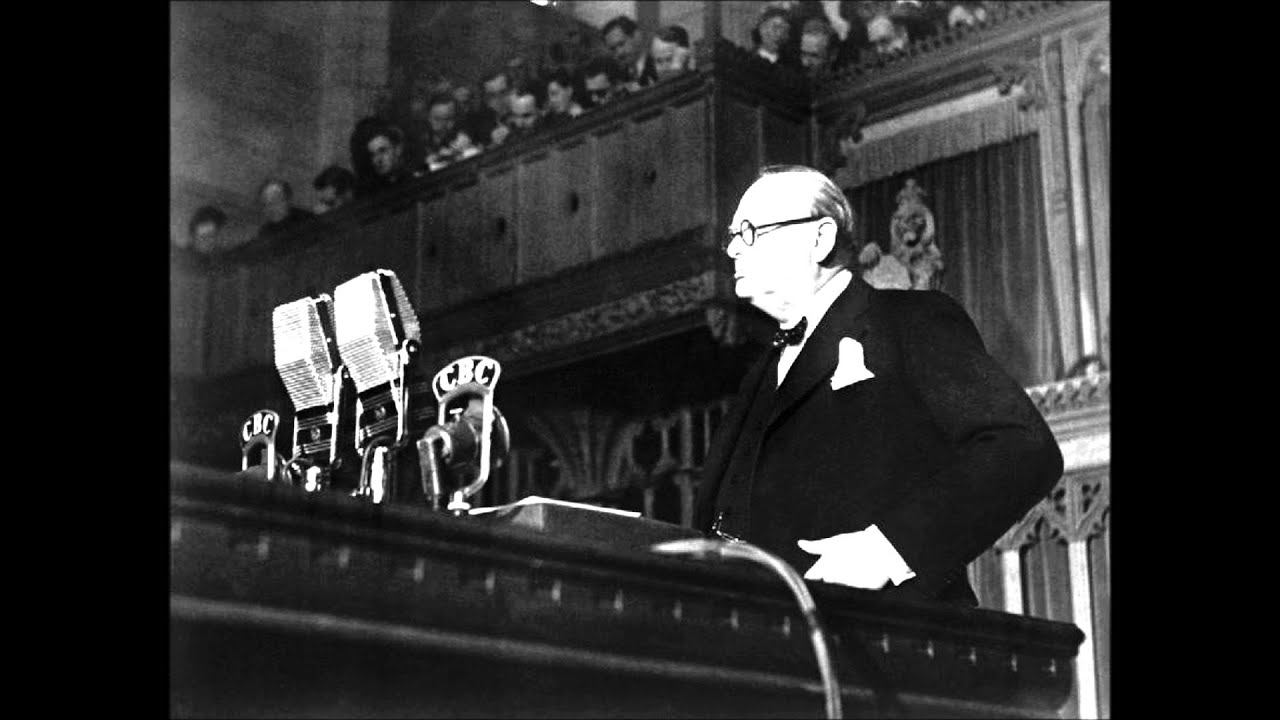
                Britain declared war on Germany on September 3rd, 1939, after promising to if Germany attacked Poland. That following year, Winston Churchill, former Prime Minister of Britain, was appointed to lead his country in a time of grief. Specifically, on May 13th, 1940, Churchill gave a speech entitled, Blood, Toil, Tears and Sweat, in which he informed the cabinet that he only had his ambition to fight against the Germans, but he was willing to use it all. In the speech, Churchill employs triumphant diction and anaphora in order to prepare the British people for a long battle. As Britain heads in to a time of certain loss, it is Churchill’s diction, ordering for victory, which aids to the British people. After summarizing the roles of the House, Churchill says, “I have nothing to offer but blood, toil, tears and sweat” (Churchill 4). In other words, Churchill does not have the objectives a war, such as weaponry and extreme physical strength; however, he does have the most valuable subjective to succeeding in war, which is mental power. He is honest in his speech, and hopes that his people will fight with all they have, even if it is just the right mind set. In addition to a more fearless message, Churchill also attempts to be realistic with his people by informing them of the road that lies ahead. Using anaphora of “we have before us” he says, “We have before us an ordeal of the most grievous kind. We have before us many, many long months of struggle and of suffering” (Churchill 5). In order to prepare people for an event, especially one that involves great physical and mental endurance, they must know the circumstances. Furthermore, the repetition here emphasizes Churchill’s straightforward briefing, while also implying that the country will work together as one united front. Thus, Churchill’s purpose in informing his people is reached because throughout the war, Britain fought their hardest, and achieved their goal of victory.


Visual: https://i.ytimg.com/vi/8TlkN-dcDCk/maxresdefault.jpg

Image result for blood toil tears and sweat speech

Caption: "Road to Victory (full of blood, toil, tears and sweat)"

Sunday, December 4, 2016

TOW #11 - Sojourner Truth's "Ain't I A Woman"


            Sojourner Truth, a women’s rights activist living during the mid to late nineteenth century, faced many struggles during her lifetime, being an African-American woman. Truth was born into slavery, but escaped with her infant daughter in 1826, where she went on to write speeches arguing her political and social opinions. One of her most famous works is called, “Ain’t I A Woman?”, from December of 1851. In this speech, Truth employs anaphora of her title phrase, and a frustrated diction in order to argue a woman’s distorted meaning in society. Truth’s introduction of the racist and unequal times of society lead up to her use of anaphora. When describing the set definition of a woman, she says, “I could work as much and eat as much as a man - when I could get it - and bear the lash as well! And ain't I a woman? I have borne thirteen children […] And ain’t I a woman?” (Truth 2). As Truth recounts, it is difficult for a woman to get necessities because men come first, with the scarps remaining. Furthermore, a woman can still be abused (“lashed”) even after bearing children for the man. The repetition of her statement toys with the fact that women are defined by such insignificant attributes, including all weaknesses. This attitude of utter frustration carries over on to her diction, when she says, “Then they talk about this thing in the head; what's this they call it? [member of audience whispers, "intellect"] That's it, honey. What's that got to do with women's rights or negroes' rights?” (Truth 3). From the use of the word “intellect”, it is shown that stereotypes do not define a person. Therefore, everyone should have the same rights no matter their intelligence, which may or may not fit the conceived idea society has for that specific group of people. Overall, Truth does not conform to the distorted definition of a person to define that person.


Visual: http://eloquentwoman.blogspot.com/2011/04/famous-speech-friday-sojourner-truth.html


Image result for sojourner truth women

Caption: "Free Lecture!"